
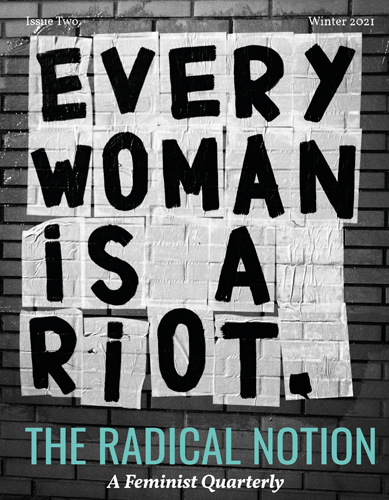
by Daisy Gudmunsen
Rebecca West, contributor to and board member of Time and Tide magazine (reviewed by Susanna Rustin), identified this mechanism of exchange many years ago: your death secures my life. In 1930s Macedonia, she witnessed a ritual slaughter of animals. The sacrificial rock gleams with fresh blood as the men seek “to smash what [is] whole, to puddle in the warm stickiness of their own secretions.”2 This sacrifice is a patriarchal fertility ritual, predictably ornamented with images of seeds and swords. It would be masturbatory if it didn’t make such extravagant use of other bodies. And the rock becomes a symbol for the “huge and dirty lie” at its heart: “if one squares death by offering him a sacrifice, one will be allowed some share in life.”
Of course, suffering and damage can’t be exchanged in return for happiness. Death can’t be exchanged for life, and you’d be wrong to try. But the lie is remarkably persistent. Many of the pieces in this issue attest to and critique the continued existence of this simplistic, transactional economy. Gender, religion, and technology fall under this rock’s glooming shadow when they attempt to supplant responsibility and reality with a neat, harmful lie. “For a woman to be good, she must be dead, or as close to it as possible.”3
Daisy Gudmunsen is completing a DPhil in modern French thought, structural analysis, and poetic form at the University of Oxford. She currently lives in Paris and teaches at the École normale supérieure. Daisy loves fiddling with words, especially other people’s.
1 Mary Daly, Gyn/Ecology: The Metaethics of Radical Feminism (Boston: Beacon Press, 1978)
2 Rebecca West, Black Lamb and Grey Falcon: A Journey Through Yugoslavia (Hong Kong: Penguin Books, 1984), ‘St. George’s Eve: II.
3 See Andrea Dworkin’s reading of Snow White in Woman Hating (New York: Penguin, 1974), p. 42. This falsehood is the real ‘Poisoned Apple’ of the tale.
4 Sonia Johnson, Going out of Our Minds: The Metaphysics of Liberation (Freedom: Crossing Press, 1987), p. 25.