

by Jane Clare Jones
If the dull substance of my flesh were thought,
Injurious distance should not stop my way;
For then despite of space I would be brought,
From limits far remote where thou dost stay.
— Shakespeare, Sonnet 44
Opening epigraph of Martine Rothblatt’s Virtually Human
1. All living things on this planet exist in material bodies (if they are animal) or material forms (if they are vegetable). A body is material, but a living thing is not just material. A dead body is not a living body. A living body is distinguished from a dead body by the fact that it is animated. The Greeks named this principle ‘psyche’ and the Romans named it ‘anima,’ thought, traditionally, as immaterial soul. But dualisms of soul and body miss that life is the animation of matter and arises only through matter. The only adequate word for this principle of animated matter — which is, from an explanatory perspective, inadequate — is ‘life.’ And while the multiplicity of organic processes are the index of life, they are not, themselves, life as such. Despite massive advances in clever monkey knowledge—our ability to analyse and represent DNA replication, respiration, photosynthesis etc. — we do not, in fact, know what ‘life as such’ is. It would serve smart-ass hubristic monkeys well to be mindful of this fact.
2. That we do not know what life is, and that it insists on evading the mastery of our techniques, causes clever monkeys quite some consternation. We do not know what makes it go, we do know what makes it stop, and we do not know why — unlike our machines — once it has stopped we cannot make it go again. All we know is that there are living bodies and dead bodies, and that once animated matter is no longer animate, it will decompose back into its material elements, through other living processes. Death is intensely painful to us, and is, fundamentally, just like life, ungraspable by monkey minds. We find this inordinately difficult to accept, both emotionally, and intellectually.
3. Abstract monkey self-reflection — often about what it means to be a monkey capable of abstract self-reflection — has long shown symptoms of this difficulty. We really cannot deal with being animated matter or with the fact that the condition of being animated matter is that one day, incomprehensibly, we will not be animate. We cannot grasp how it is that animated matter generates awareness, and awareness of awareness, and awareness that we cannot grasp how we are aware. Just as we do not understand life, we do not understand how consciousness, or what we reductively call ‘mind,’ arises in and through the animation of matter. It would serve us better to be also mindful that we do not understand the existence of our minds.
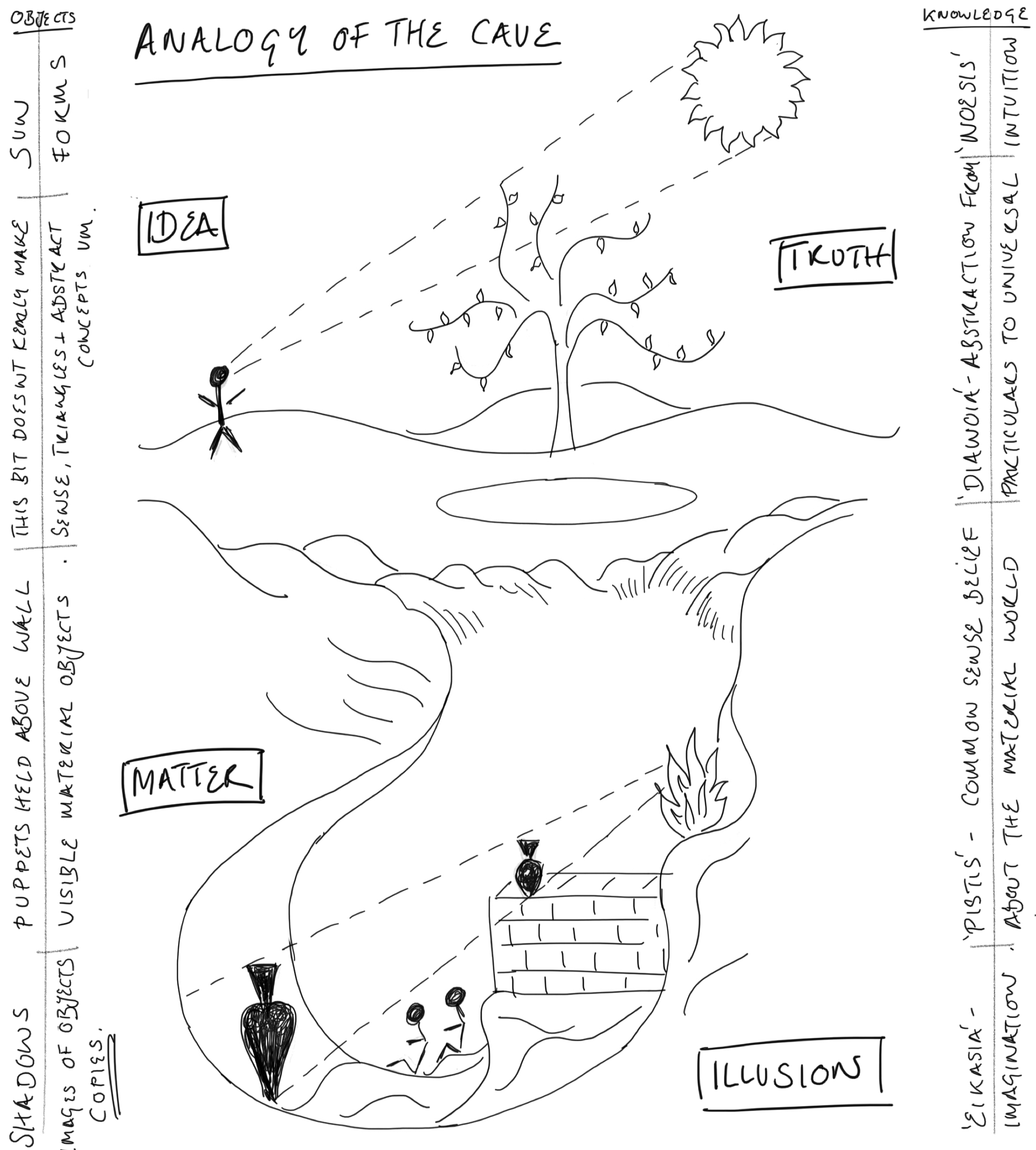
5. Since monkeys started writing down their abstract self-reflections — barely a fraction-of-a-nanosecond-ago by planet-time — we’ve been trying to wriggle out of the fact that we are embodied awareness. ‘Bodies die, therefore we are not bodies.’ ‘Bodies hunger, thirst, sicken, yearn, can be wounded, therefore they are not us.’ The words littering our philosophy and literature heap scorn upon eviscerating scorn; the body is nothing but a dark, deceptive, wanton, corrupting, polluted pile of “mortal trash,”2 and if Plato — who bears as much responsibility as anyone for telling this pernicious lie — is to be believed, our duty is to dissociate from its treacherous earthy embrace, and ascend, by dint of pure immaterial abstraction, into the deathless sky. As if such a thing were possible. As if humans could stare directly at the centre of sun without destroying the fabric of their eyes.
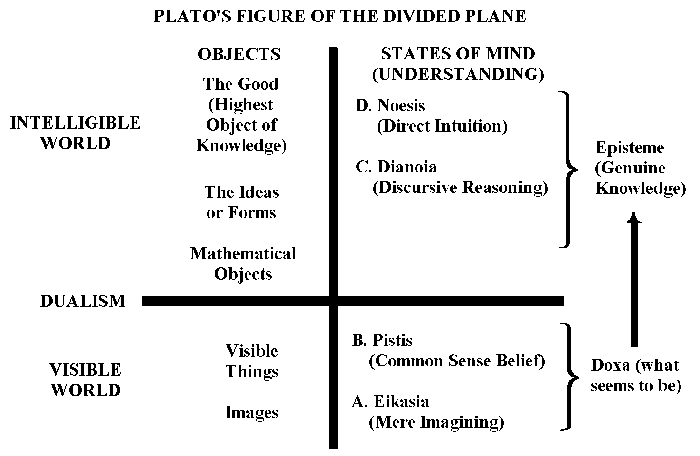
6. But monkeys will not be deterred. We will imagine our ideas, extracted from dark, duplicitous bodies, glinting in the heavens. We will fall in love with triangles and the crystalline eternity of number, equation, and algorithm. We will tell and retell the tale of the afterlife, of the coming of heaven to earth, of the word made flesh, of bodies broken on crosses and reborn, into an everlasting life that is not and can never be life, because the condition of possibility of life, on this planet, is that you are the kind of thing that dies. Life would only be worth something, we seem to think, if it was worth more than life, if it were beyond life, but the only life beyond life, would be, in fact, already death. Life matters so much to us, we would trade it in a heartbeat for an already death which cannot therefore die, rather than struggle with living, and sustaining ourselves, in the material life that we are. The drive to transcendent immaterial immortality is, at root, a death drive, and in striving for the beyond of life, in its resentment and contempt for the material limits of the living, it will deny and disassociate itself from the conditions that sustain it. We want life so much that we will, in fact, destroy it with our denial and disrespect.
7. This fear, and resentment, of our material dependence on what we cannot understand or fully master echoes through all our relations to the more-or-less animated matter that creates and sustains us. The body and bowels of this rock, the efflorescence it shoots forth, the plants that turn the sunlight into sugar that makes our bodies move, the breath by which we burn that sugar, the quiver-beat of flesh, and above all else, the body blood mind and milk of the mother that brings us each to life. We cannot plot the genealogy of civilizations sprung from the fertile crescent and refuse to reckon with the social and symbolic transformations begun when the earth was first broken up and ploughed, enclosed and exploited, and the bodies of women remade by the masculine mind as passive, fertile, appropriable territory awaiting their seeds. The phallic mode of meeting the material dependency of embodied animal existence has long been to deny it in thought, while appropriating and exploiting what it refuses to recognize, but nonetheless needs, in fact. And so agriculture → patriarchy → rape → colonialism → slavery → capitalism are tied together by the logic of erasure → appropriation → extraction of matter and its animation.3 That is, by the disrespect and domination of life.
8. Some five millennia later, very little in our fundamental metaphysic, in the unflagging drive to transcend the facts of our animal existence, has changed. Empires have waxed and waned, the earth has been split open to offer up her sedimented reserves of sunlight, and we have used it to power our machines, now warming the planet to perilous extremes. At this moment, when we should, above all, be asking ourselves how we got here, why we have imperilled ourselves so thoroughly by denying and disrespecting the material animation on which we depend, many minds are instead transfixed by the transcendent possibility of machine life. If animal life is unsustainable, we will, finally, make our escape and fulfil our always-destiny in the realm of the ideas, our mindfiles uploaded into the ‘cloud.’ (Which is not a cloud and is not in heaven. Somewhere here on earth, there is, there will always be, a bank of silicon and circuitry, pulled from the ground, powered by energy, maintained, one imagines, by a hardware service class, while the digital elites dream their age-old dreams of abstracted immortality). They do not want to know, they will not hear, that we do not understand the principle of animated matter. That bodies are not machines, that minds are not computers, that DNA is not just data, that we have absolutely no basis for believing that information and dead matter arranged at an adequate degree of complexity will simply spring into life, by our final mastery of alchemical magic.
9. In the last two decades, human social life, for swaths of the global population, has been completely transformed by migration into virtual space. The more immaterial aspects of our awareness — our likes, attention, interests, concern, above all, what we want and do not want — have been siphoned into the machine, which they then animate, both through encounter, and conflict, with other desires. Plato was misguided to think desire is just a product of our fleshy, hungering selves. Desire is what animates us — what animates all animals. It moves us into the world, in search of food, shelter and sex, yes, but also in search of connection, recognition, purpose, knowledge, and meaning. Freud was not entirely wrong when he called the libido, the life-instincts in general, ‘Eros,’ although he was emphatically wrong to think our satisfactions as nothing but expelling uncomfortable excitation: the quenching of a baby’s thirst or the expulsive release of male orgasm. We are drawn into the world, again and again, not just by what we lack, but also by a positive desire, and the pleasure, of encounter and play, of project and collective co-creation, by the need to be immersed in the flow of ourselves as we unfold in our doings-in-the-world. Desire is not ‘life as such,’ but as key to what animates us, is one of its enduring indices. Life lived in the absence of desire is unbearable — the slow, agonizing, suspension inside endless static time which characterizes the ‘living death’ of depression, or, as in Denise Riley’s memoir on grief, the experience of Time Lived, Without Its Flow.
10. As a product, and indeed an engine, of the animation of bodymind, desire thus arises not just in the wanting body, but in the yearning mind. Philosophy, theology, art, science, technology; the search for status, the accumulation of wealth, the demand for recognition, the creation of meaning; the fear of death, the drive to transcendence, the urge to mastery, the denial of dependence; all these are produced through the action of desire. Contra Plato then, in the age-old edifice of metaphysical polarity, desire is allied as much with the mind as with the body (from which the mind cannot dissociate). We may resent the body for the way its hungering disturbs our conceits of invulnerable, stoic rationality, but the fact is the mind also wants, and what most often frustrates its wants are the limits of material facticity, and the desires of other people.
11. Feeding our desire into the machine seems then to offer limitless satisfaction. The machine pretends to exist outside the constraints of material facticity, a frictionless, demassified utopia, a world freed from gravity, where we can finally ascend, out of the obdurate dark of the cave, and realize ourselves, in illuminated, almost immaterial pixels, as we truly want to be. It is the New Frontier, Manifest Destiny, a virtualized American Dream. Inside the machine we are encouraged to produce and endlessly curate ourselves as avatar, brand, lifestyle, influencer, commodity. To attract other desires to the edited, touched-up, perfected, idea(l) of ourselves, shorn of actual matter, filtered through filters that index our desire to transcend our very selves. Entire generations have now been raised inside the narcissistic matrix of this machine, funnelling their desire not into embodied-activity-in-the-world, but into fashioning themselves as avatar, object, and ideal identity. Encouraged to sidestep the challenge, and satisfaction, of manifesting themselves and their desires in messy confounding co-creation with the world and with each other, and skipping straight to the ‘good part,’ where we get to be precisely who we always dreamt ourselves to be. An individual immaterial god.
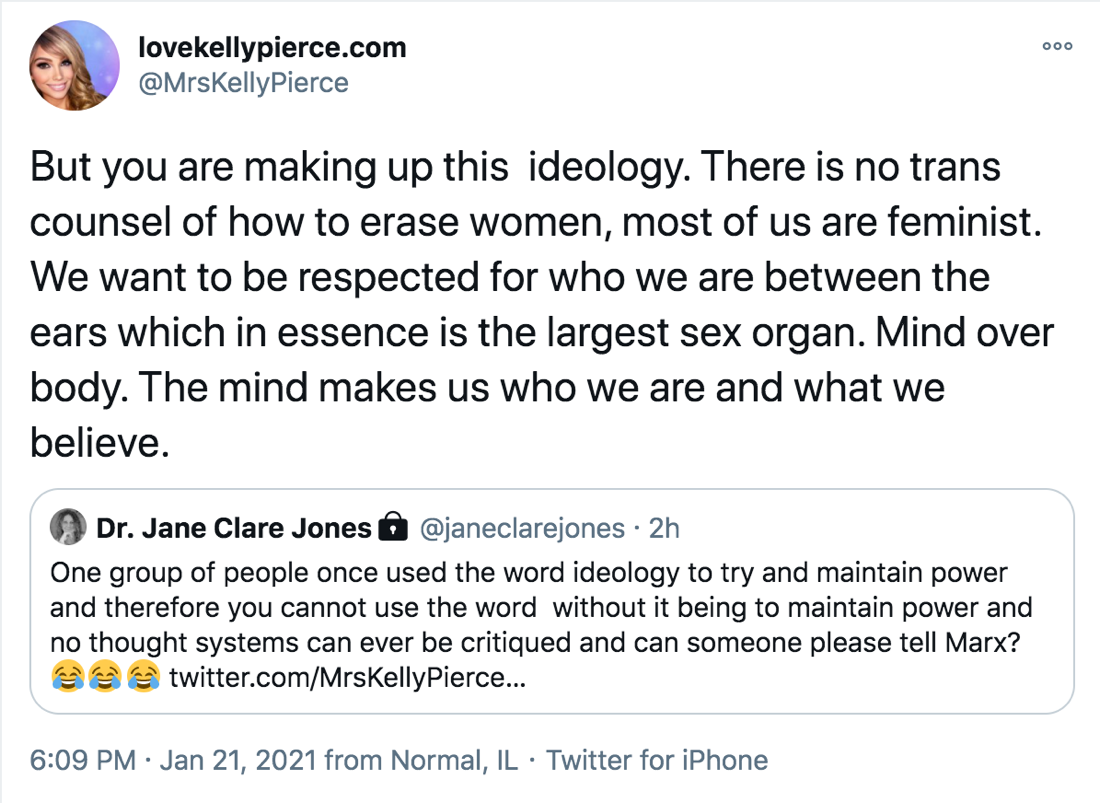
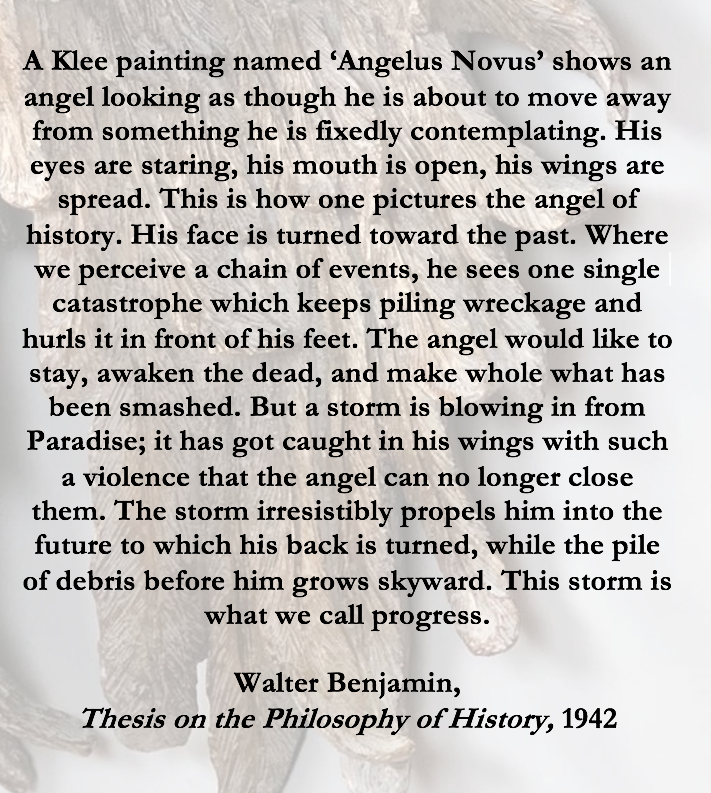
12. Into this catastrophe of narcissism and dissociation, an ideology inserts itself. The brain-child of Transcendent Man4—Techno-Platonism v.10.13.4™. The fit is perfect. A generation raised on the promise of digital transcendence, on the frictionless fulfilment of their desires, but who find themselves, in fact, lost, alienated, and in pain inside their refracting, bloodless paradise, are sold a techno-salvation story — the newest and shiniest yet! You are free to be absolutely and completely only who you feel yourself to be, who you desire yourself to be, and nobody, no-body, can stop you. Desire, life, will finally transcend the mortal trash that weighs it down and holds it to the surface of this rock, and become sovereign over all it surveys. The body will be bent to our will, its pointless corrupting compliance to the cycles of generative life discarded, until we are finally able to discard it in its entirety. This is the manifest destiny of human progress, the ‘right side of history,’ the fulfilment of “our image of happiness … indissolubly bound up with … redemption.”5 No one should underestimate the power of this millenarian myth. Of how many times we have compulsively, recklessly, reimagined the story of the soul’s sovereign transcendence, and its redemption in the life beyond life. At this point in history, facing the prospect of material extinction, because of our lack of respect for life, that techno-corporate power would sell this story to an alienated, dissociated generation whose future they have themselves stolen is a crime against humanity and the earth.
13. One might imagine, or rather, have hoped, that the devastating intercession of the virus, in all its material implacability and horror, might have awoken us from our digital slumbers. As the symptoms of environmental, cultural, financial and political demassification accumulate outside our windows, and the conflict between our unerring desire for transcendence and material facticity piles up more and more wreckage, we have retreated, more than ever into the machine. We are not satisfied. The shimmering animation of our desire inside the virtual leaves us wanting. We want actual material movement in the world, the landscape whizzing past train windows, our faces under the sun and the ground beneath our feet. We want real rooms filled with real human laughter and the buzz of real human energy. We want to hear each other’s voices and look each other in the eye. We want to touch each other.
Now, we must hold onto this.
1 It is perhaps understandable that we would have made this mistake, given that almost all animals that possess higher intelligence belong to the phylum chordata, the majority of which have central nervous systems consisting of a brain inside a skull and a spinal column. The glaring exception to this principle, we are now aware, is the octopus, which as a mollusc with a relatively rudimentary nervous system would seem to have little business being that intelligent at all. I like to think of the octopus as a kind of evolutionary rebuke to our dualist metaphysics and veneration of our brains as computational hardware. The entire body of an octopus—especially its multitudinous sensate suckers—is a complete gelatinous sentience, a spineless, aquatic bodymind, a floating intelligence that is a body.
2“But tell me, what would happen if one of you had the fortune to look upon essential beauty entire, pure and unalloyed; not infected with the flesh and colour of humanity, and ever so much more of mortal trash?” Plato’s Symposium, 211e.
3‘Erasure’ is to be taken here in the largest sense, that is, as including not only the way mechanisms of appropriation/domination may deny the existence of something on which it depends, but also the denial that they exist in their own terms, and with their own principles of subjectivity, fecundity, or animation. It thus includes objectification, dehumanization, and the entire mechanism of phallic othering, through which those oppressed along the axes of sex, race and class are assigned the characteristics of the less properly human and defined by projective inversion from the position of the phallic subject (cf. table of binary opposites in Tatman’s “Attack of the Werewords” and the discussion of ‘trans’ identities in Solura’s essay “How to build an American Robot“). My claim here, and I take this to be axial to radical feminism, and central to the analysis of the mechanisms of domination which is currently being repressed by the anti-materialist and individualist analysis of oppression-as-privilege, is that the fundamental structure of this mechanism derives historically from the objectification and mastery of the earth in its historic intertwining with the objectification and mastery of women’s bodies and reproductive capacities. Traces of this history are still found in the use of agricultural metaphors around sex (‘sowing wild oats,’ ‘ploughing’ as a synonym for ‘fucking’), and extend into the thinking of women’s bodies as territory, and the thinking of the colonization and appropriation of land through sexual metaphors and vice versa (‘virgin territory,’ the intertwining of rape and colonization in metaphor and practice, thinking penetration as proprietorial possession etc).
The most revealing lexical trace of this history is the designation of males’ contribution to the reproductive process as ‘semen,’ which derives from the Latin for ‘seed.’ Seeds are produced through fertilization, that is, they are the product of the combination of male and female gametes. This is therefore a denial/erasure of the active female contribution to fertilization, which posits women as the passive recipient of an entirely male generative principle, consonant with Aristotle’s famous discussion in The Generation of Animals. In a significant sense, this moment holds within it, like a hologram, the entire structure of phallic dominance and the systems it has patterned. The necessity of relational co-creation, between male and female, between matter and idea, between the desire for transcendence and material facticity, is entirely elided in the image of the self-creating male subject, the ‘self-made man,’ who needs, depends, is vulnerable to nothing, because he has already reduced that on which he depends to the sub-human or the object, to nothing more than inert, passive, material he has already appropriated to himself. That is, in a significant sense, the entire structure of phallic dominance is held in the reduction of the earth and its animation to object, and of women to earth. It is through this lens that the present attempts to distort and deny the existence and meaning of sexual reproduction as representative of the fundamental principle of relational co-creation should be metaphysically interpreted. It is entirely consonant, and in fact inextricably bound, to the effort to deny that creation and generation (of both reproductive and non-reproductive types) can only take place through the dialectical interaction of idea/desire/transcendence and material facticity, and with the effort to assert the absolute sovereignty of identity over both matter and social relation.
4 Transcendent Man is the title of a 2009 documentary about Ray Kurzweil, the futurist and theorist of the technological ‘singularity,’ the thought that the exponential increase in computation power will at some point, by the end of this decade apparently, spontaneously generate artificial intelligence. The documentary opens with Kurzweil’s trenchant refusal to accept death, and the next 40 minutes (I couldn’t get further) includes a parade of exclusively male talking heads saying ‘exponential’ on a loop, because evidently, ‘computation x exponential = life.’ Notably, Kurzweil wrote the foreword to Martine Rothblatt’s Virtually Human (2014), which, Kurzweil maintains, makes “a compelling and convincing case for virtual humans. After all, what difference does it make if our mental circuits are biological or electronic if the result is the same?” For a more detailed exploration of the role of Martine Rothblatt’s transhumanist mind-over-matter dualism to the development of trans ideology, please see my ‘Brief History of Transgender Ideology’.
5Walter Benjamin, Theses on the Philosophy of History (1942).